You can tell it's the beginning of fall when the leaves begin to change color, the air feels a bit crisper and Halloween costumes and candy have already arrived in the stores. But when does fall officially kick off? In 2014, the Autumn Equinox falls on September 23rd.
Balancing Act
The Fall Equinox is the first day of fall and signifies the start of shorter days and longer nights in the Northern Hemisphere. In the Southern Hemisphere, the opposite takes place. On this day, both day and night are equal, with 12 hours of light and 12 hours of dark.The balance of light and dark also happens on the Spring Equinox but in the spring, the days (light hours) become longer and the nights (dark hours) become shorter.
During an equinox, the Earth's North and South
poles are not tilted toward or away from the Sun, and the duration of
daylight is theoretically the same at all points on Earth's surface.
Astrological Significance
The astrological sign Libra also begins on the Fall Equinox. Libra's astrological symbol is based on the Equinox. Libra's symbol is a scale - representing the balance of light and dark.
A Pagan's Paradise
The Autumn Equinox is also known as the Pagan holiday, Mabon. It is on this day that Pagans celebrate balance, the harvest season and Thanksgiving. On the Autumn Equinox, food, such as dried vegetables, is offered back to the Earth in a gesture of thanks for all that the Earth has supplied in the past season.
Autumn Equinox
Activities
If you're looking for things to do for the Autumn Equinox, why not help out with some yard work? Pick up the fallen apples or rake the leaves. This way, you'll be helping your 'rents while being out in nature at the same time. If that doesn't sound too appealing to you, then how about having some friends over to bake an apple pie or to make some fall crafts?
One of the deadliest storms to hit the United States, Hurricane Katrina, in 2005, caused large-scale damage to life and property alike.
"We lost everything. Katrina didn't care if you were poor or rich; all the houses look the same now".
-- Mississippi resident Penny Dean (Quoted in People Magazine)
Here are some facts about Hurricane Katrina, the massive hurricane that devastated Louisiana in 2005.
Hurricane Katrina was one of the 5 worst storms in US history, and
the worst hurricane of the 2005 season. It was also the country’s most
expensive natural disaster.
The hurricane formed over the Bahamas and gained strength in the
Gulf of Mexico. It affected the states along the gulf, from Florida to
Texas, but most notably Louisiana, before continuing up the east coast.
Hurricane Katrina actually made landfall twice, once in Florida and
once in Louisiana on August 2, 2005. In total, it affected an area of
about 90,000 square miles.
Hurricane Katrina was the strongest hurricane recorded in the Gulf
region, at that time. At one point, the winds were measured at close to
175 mph.
Over 1,800 people died as a result of the storm. Hundreds of other people were forced to move to other cities.
Hurricane Katrina directly caused massive amounts of property damage
to the state of Mississippi, whereas Louisiana was devastated by flood
waters as its levee system failed. This took place after the storm had
moved further inland.
New Orleans was one of the areas most affected, with about 80
percent of the city flooded, and 900,000 people without electricity. The
cost of the hurricane in Louisiana and Mississippi was more than $150
billion.
The storm surge from Hurricane Katrina was so great that it reached 12 miles inland.
The storm also caused a lot of debris to be piled up. If all the
debris was stacked together in an area the size of a football field, it
would make a pile 10 miles high.
In preparation for the hurricane, the first ever mandatory
evacuation of New Orleans was ordered. About 26,000 residents sheltered
in the huge Louisiana Superdome, where they were given food and water.
After the hurricane hit, over 60 countries around the world promised money to help with rebuilding. The biggest contribution came from Kuwait, which pledged $500 million.
Hurricanes Are Powerful
You probably know a hurricane is a large, powerful storm that can
cause a lot of rain and wind. Everyone pays attention to hurricanes
because they can be dangerous. Some hurricanes come and go and really
don't cause much more trouble than a bad thunderstorm. Others may damage
homes and cause some flooding that goes away on its own.
You might remember that Hurricane Katrina was unusually strong and caused many more problems than most hurricanes.
Could It Happen to Me?
You might wonder if a big hurricane could happen where you live.
Hurricanes are always a concern, especially for people who live near a
coast. When a hurricane is on the way, weather forecasters can predict
which areas will be affected. Based on that, cities and states can tell
people to evacuate — to move out of the storm's way until it's over.
Knowing that a hurricane is coming can be helpful, even if you won't
be evacuating. Your family will want to have extra water, food, and
batteries for flashlights. Why? Because storms can knock down trees and
that can knock down power lines. Fixing the power so everyone has
electricity again can take a while after a hurricane.
A Hurricane Is a "Natural Disaster"
Maybe you've heard people call a hurricane a "natural disaster," but
what does that mean? A natural disaster is when weather or nature causes
big problems, like a hurricane, a tornado, an earthquake, or a tsunami.
Depending on where a person lives, there's more risk of certain kinds
of natural disasters.
But wherever you live, it's important to remember that there are lots
of people looking out for you. In a bad storm or other crisis, this
would include not only moms and dads, but also police officers,
firefighters, doctors, nurses, and other people who are trained to
handle emergencies.
An adjective describes a person, place or thing, while an adverb describes an adjective, verb or another adverb. Adverbs do not directly describe nouns and often end in -ly. They provide information on where, why, how, when and frequency.
Have you ever thought about the expressions people use on a daily basis and wonder how they became such a widespread part of the English language? Well, I can assure you that I have. The one that recently piqued my interest is “kick the bucket.” As I heard those words escape someone’s lips, I thought to myself, “What on earth does a bucket have to do with death?” If you’re just as neurotic as I am, have any interest in these sayings and their histories, or just realized “kick the bucket” really is an odd saying and you’d like to figure out the history behind it, then this list of 25 common sayings and where they came from is the list for you. I hope it doesn’t “rub you the wrong way.”
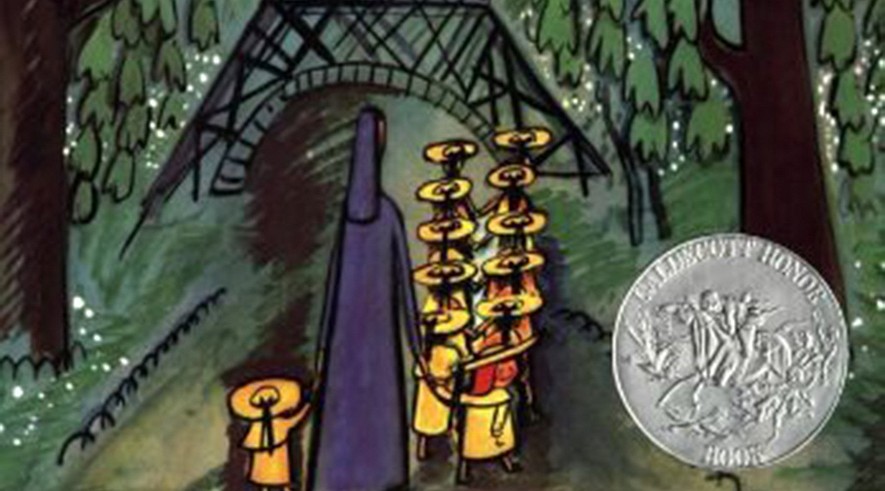
"Madeline" was published 75 years ago by author Ludwig Bemelmans. In
October and November, the Chicago Public Library is marking the
anniversary with “Madeline” birthday parties at six libraries. Special
activities and a costumed “Madeline” character will be at the Bookamania
children’s book fair on Nov. 22 at the Harold Washington Library.
Google Art Project is an online platform through which the
public can access high-resolution images of artworks housed in the
initiative’s partner museums. The project was launched on 1 February
2011 by Google, in cooperation with 17 international museums, including the Tate Gallery, London; the Metropolitan Museum of Art, New York City; and the Uffizi, Florence.
The platform enables users to virtually tour partner museums’
galleries, explore physical and contextual information about artworks,
and compile their own virtual collection.
On September 18th, the residents of Scotland (16 and older) will head to the polls to say Yes or No to the question: "Should Scotland be an independent country?". The answer to this simple question will decide whether Scotland will become the world's newest independent nation or, continue its 307-year-old alliance with Britain.
This intriguing site has the user choose an "answer," and then the
computer asks 20 questions trying to determine what your answer is. The
answers to the 20 questions aren't just YES or NO; they also include
SOMETIMES, PROBABLY, IRRELEVANT, and others.
When you arrive at the site, click your language (there are MANY
languages to choose from). Enter your gender, age, and location
(optional). Then choose the "game" you wish to try. Some are more
commercial (Disney, The Simpsons, or Star Trek). Others have educational
value (Harry Potter, Earth, or Classic, Famous people). This is a fun
and challenging activity. There are disclaimers that the "game gets
smarter" the more you play because the game compiles facts over time. It
is involving and fun to play. The site does include some
advertisements.