Εμφάνιση αναρτήσεων με ετικέτα LINKING WORDS. Εμφάνιση όλων των αναρτήσεων
Εμφάνιση αναρτήσεων με ετικέτα LINKING WORDS. Εμφάνιση όλων των αναρτήσεων
Δευτέρα 15 Φεβρουαρίου 2016

Παρασκευή 27 Νοεμβρίου 2015


Πέμπτη 22 Οκτωβρίου 2015
Πέμπτη 15 Οκτωβρίου 2015

Κυριακή 31 Μαΐου 2015

Κυριακή 29 Μαρτίου 2015

Παρασκευή 9 Ιανουαρίου 2015

Δευτέρα 14 Απριλίου 2014

Δευτέρα 3 Μαρτίου 2014

Τρίτη 7 Ιανουαρίου 2014

Πέμπτη 12 Σεπτεμβρίου 2013
Πέμπτη 30 Μαΐου 2013
HOW TO WRITE PERFECT PARAGRAPHS
Paragraphs
It is the responsibility of the writer in English to make it clear to the reader how various parts of the paragraph are connected. These connections can be made explicit by the use of different signalling words
("Signal words" give hints about what is about to happen in what you're reading. Understanding them is a key to comprehension. They help you to put in the correct tense. You can easily put in the correct form of the verb if you know the signal word and which tense it demands.)
| signal word | tense |
|---|---|
| every ... (day) | Simple Present |
| sometimes | |
| often | |
| usually | |
| seldom | |
| now | Present Progressive |
| at the moment | |
| Look! | |
| Listen! | |
| last ... | Simple Past |
| ... ago | |
| yesterday | |
| in 1990 | |
| yet | Present Perfect |
| ever | |
| already | |
| so far | |
| up to now |
Τρίτη 14 Μαΐου 2013
LINKERS
Transitions are phrases or words used to connect one idea to the next. Transition words are like road signs. They help the reader understand the direction of your thought.


Τρίτη 19 Μαρτίου 2013
WRITING - LINKING WORDS-
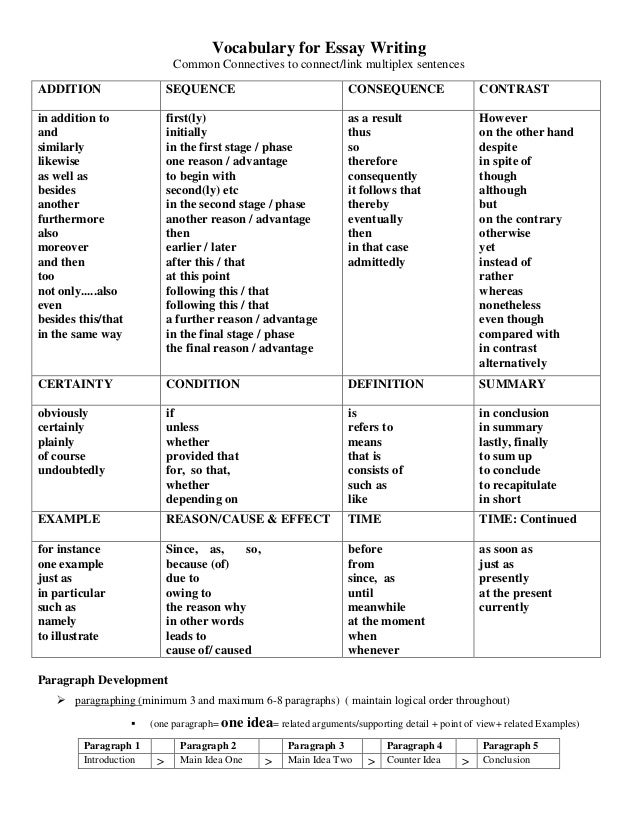
Linking Words
Linking words
Like other languages, English has a lot of cohesive or transitional devices and linking words that can be used to express and join ideas.
1. Expressing addition
To add information, you can use these expressions:
Examples:
in addition, - as well as - moreover - what is more - not only...but also... - furthermore - besides - also - too - and...
- If the project fails this will have terrible consequences not only on our department, but also on the whole organization
- John's grades are terrible because he has been so lazy these days. In addition to this, his relationship to his parents got worse.
- The report is badly written. Moreover, it's inaccurate.
2. Expressing contrast
To express contrast, you can use these expressions:
Examples:
although - even though - in spite of / despite - however - yet - nevertheless - nonetheless - on the contrary - whereas - on the one hand ...but on the other hand... - conversely - but...
- Brain drain has terrible consequences on the developing countries. Nevertheless, nothing has been done to solve the problem or at least reduce its negative effects.
- In spite of / despite Fred's old age, he goes jogging every morning.
- Although she's very nice, her classmates hate her.
- They have got two children, a boy and girl. The boy looks after his father whereas the girl looks after the mother.
3. Expressing cause and effect
To express cause and effect, you can use these expressions:
Examples:
consequently - as a consequence - as a result - therefore - because of this - for this reason - because - since - as - for - due to - owing to
- She remained silent, for she was so depressed to talk.
- We can't go to Sue's party because we'll be busy working on our project.
- The plane was delayed because of the foggy weather.
- He had spent most of his time hanging around instead of revising his lessons. Consequently, he had a lot of trouble answering the exam questions.
5. Expressing purpose
To express purpose use the following words:
Examples:
in order to - in order not to - sa as to - so as not to - to - not to
- She wakes up early in order to be on time to work.
- They visited him so as to offer their condolences for the death of his wife
- He helped the new policewoman so as not to fail in her first mission.
4. Summarizing
To summarize, you can use the following expressions:
Examples:
in conclusion - to conclude - to sum up - in a nutshell - in brief - in short - all in all - everything considered...
FROM: http://www.myenglishpages.com/site_php_files/writing-linking-words.php
Τετάρτη 6 Μαρτίου 2013
Transition Words OR Linking words
Transition Words:
CONTINUE READING :https://www.msu.edu/~jdowell/135/transw.html
What are transitions or linking words and how are they used?
Linking words help you to connect ideas and sentences, so that people can follow your ideas.- transitions are phrases or words used to connect one idea to the next
- transitions are used by the author to help the reader progress from one significant idea to the next
- transitions also show the relationship within a paragraph (or within a sentence) between the main idea and the support the author gives for those ideas
- different transitions do different things....
Transitions may be "Additive," "Adversative," "Causal," or "Sequential."
| Additive Transitions | Adversative Transitions | Causal (not casual) Transitions | Sequential Transitions |
Πέμπτη 7 Φεβρουαρίου 2013

Πέμπτη 13 Δεκεμβρίου 2012

Εγγραφή σε:
Αναρτήσεις (Atom)